


Nomorewaitingforyourluggageaftersurgery
A study by Zurich University of Applied Sciences (ZHAW) has confirmed what we have observed in practice for some time. We recently launched two products, ZippBag and ZippScan, which offer real benefits for both clinics and patients.
The independent study, conducted in collaboration with Baden Cantonal Hospital (KSB), produced convincing results. The focus was on transporting and managing patient property. The following criteria were evaluated: Working time, user and patient satisfaction, loss rates and potential cost savings. The study clearly demonstrates that eliminating transport costs and making the ZippBag available at the patient's bedside immediately would result in significant efficiency gains.
In summary, the results demonstrate that using ZippBag and ZippScan optimises processes in several areas.
TimeEffortinMinutes
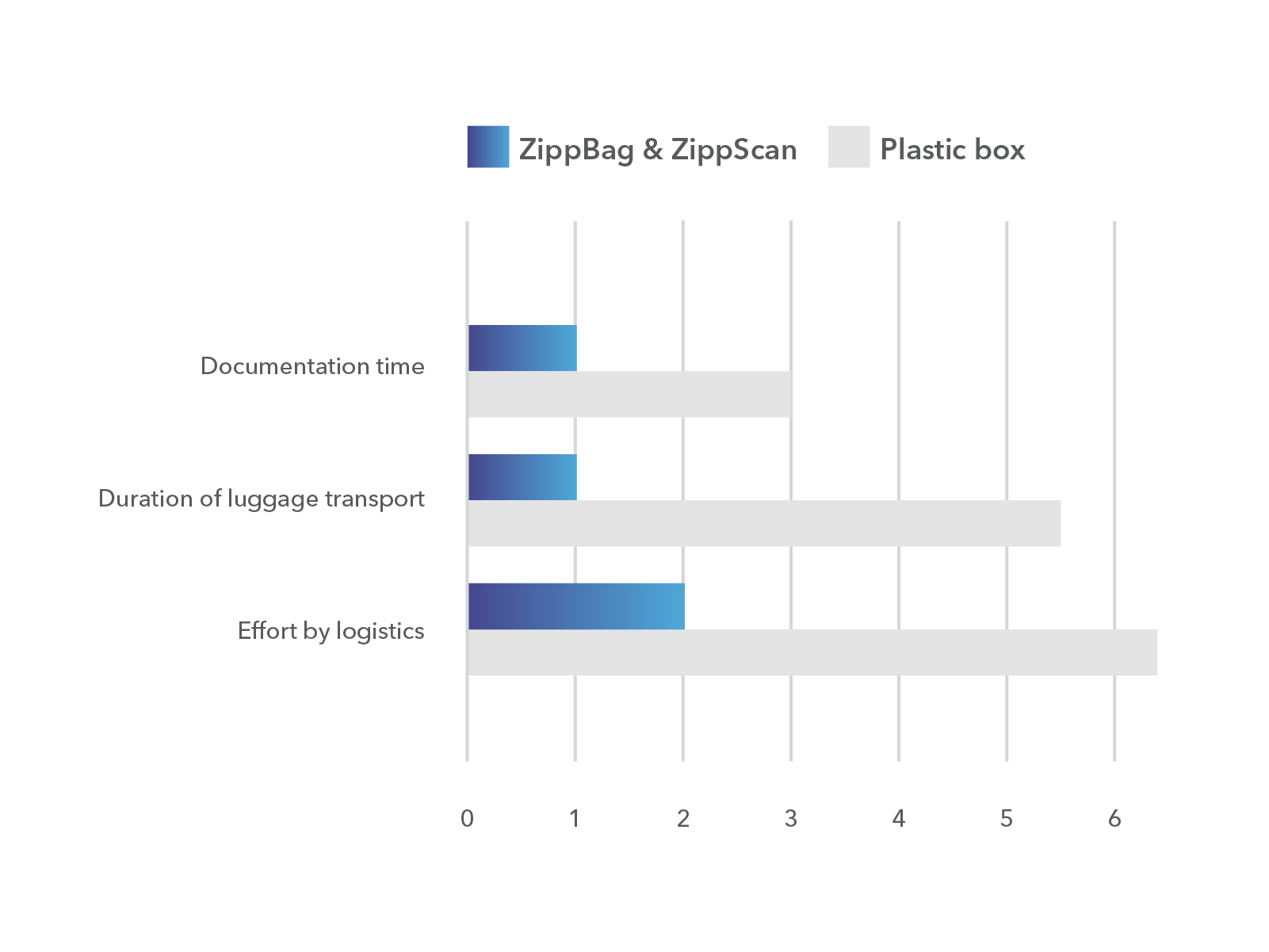
Using the ZippScan application reduces documentation time from approximately 3 minutes to around 1 minute. On average, transporting luggage with the ZippBag takes 1 minute, compared to 5.5 minutes with conventional plastic boxes. There are also clear differences in the time required for logistical handling. The ZippBag takes 2 minutes, whereas the plastic box takes 6.5 minutes.
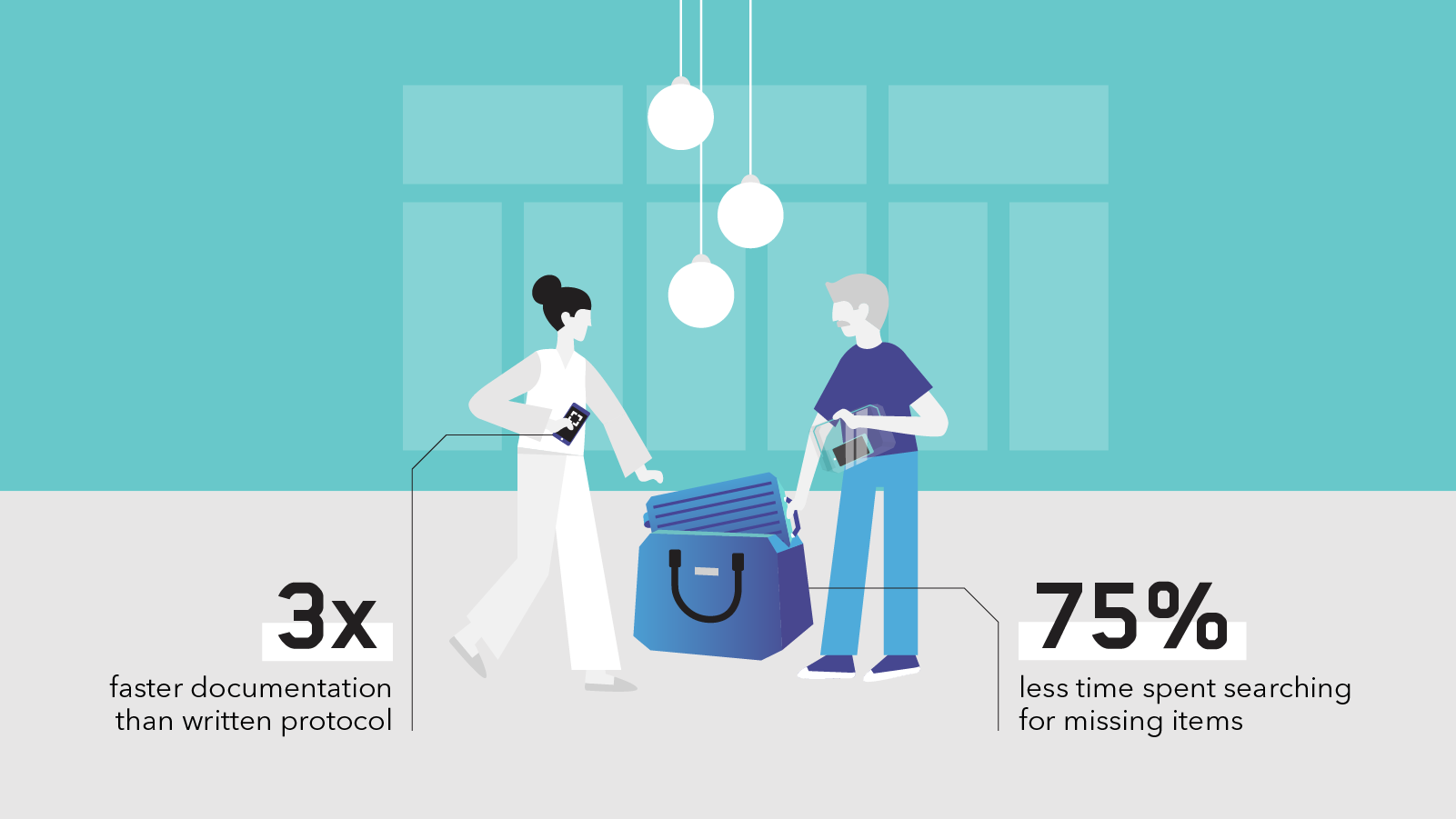
We are particularly pleased with how popular the two products, ZippBag and ZippScan, have proven to be. Nurseing staff appreciate how much simpler and faster the documentation process is. The entire transportation process is fully traceable, which significantly reduces the time spent searching for missing items and improves the efficiency of day-to-day care.
Patient feedback is also extremely positive: when ZippBag and ZippScan are used, waiting times for luggage after the surgery are significantly reduced. Alternatives involve waiting times of at least 30 minutes. However, in more than half of cases, the waiting time was more than 30 minutes or even over an hour.ZippBag eliminates this tedious wait completely. The return process was also significantly simplified, with respondents perceiving it as very quick and uncomplicated. Overall, the ZippBag performed much better than plastic boxes, which are widely used instead. It is particularly pleasing that none of the respondents had any negative comments about the ZippBag.
LossesandCompensations
Our research indicates that hospitals make goodwill payments of between CHF 50,000 and CHF 250,000 per year for items that are supposedly missing, depending on their size. These costs can be avoided by using ZippBag and ZippScan. Throughout the study, no documented losses or compensation payments were recorded when ZippBag and ZippScan were used. By contrast, several such cases were recorded with the conventional solution. Thanks to Zippsafe products, safety when handling patient belongings is increased and hospitals can save considerable costs in the long term.
Economicefficiencyandpotentialsavings
The results regarding potential savings in hospital operations are also extremely interesting. For the KSB, savings of up to CHF 200,000 per year could be realised. Of this, CHF 100,000 can be attributed to reduced logistics and space costs, as well as reduced time spent by nursing staff. The remaining CHF 100,000 is due to the digitisation of documentation using ZippScan. These figures demonstrate the positive outcome of comprehensive implementation.
Thanks to this innovative approach to managing patient property, logistics processes can be organised more efficiently. While hospitals save time and money, nursing staff and patients benefit from a more transparent and user-friendly process.
The findings of the study project demonstrate and confirm the many advantages of ZippBag and ZippScan. However, KSB is not the only organisation that should benefit from this. These solutions could also be implemented in other hospitals and clinics.